Why “Flexibility” Turns Into Chaos—and How Living Processes Keep Teams Fast
When a business is growing, chaos often looks like flexibility.
At first, it even feels like a competitive advantage: fewer rules, faster decisions, everyone “just does what needs to be done.” But growth changes the physics. More people, more parallel workstreams, more stakeholders, more dependencies. And at some point the same chaos that once felt empowering starts to drag the team down.
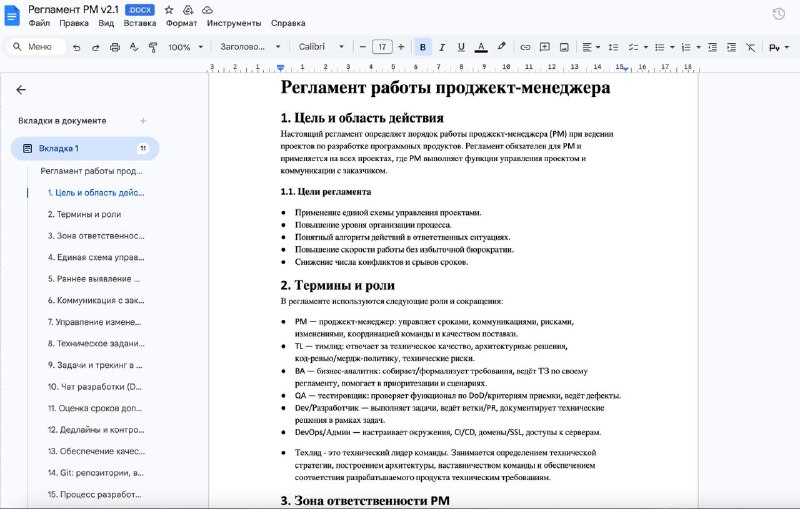
Why I’m Rewriting Our Team Regulations Right Now
Right now, my team lead, our project manager, and I are rewriting our internal regulations—especially the PM regulation. The deeper we go, the clearer one simple thing becomes:
Everything around us changes very fast, so we can’t leave processes frozen in time.
Even in companies that move quickly, it’s easy to keep operating with “old” workflows simply because they once worked. But what worked for a 5-person team breaks at 15. What worked with one client breaks when you have five. What worked before the product matured breaks once delivery becomes predictable and clients expect consistency.
AI Helps, But We Still Build With People
We can add as much AI, automation, and tooling as we want—and we should. It speeds up a lot: documentation drafts, reporting, analysis, routine coordination. But the core of execution is still human.
And that’s why the project manager carries such a heavy layer of responsibility:
- deadlines and delivery cadence
- client expectations
- risk management
- scope changes and new inputs
- communication inside the team
- quality of delivery
In practice, a PM is the connective tissue that keeps the system stable while everything else is moving.
When a “Regulation” Stops Being Bureaucracy
This is the moment where a regulation (or playbook, or process doc—call it what you want) stops being “bureaucracy.” Done right, it becomes:
- a support structure for the team
- an adaptation point for new people joining
- a source of truth in ambiguous or stressful situations
- a way to keep speed during crises instead of losing momentum
It’s not about adding meetings or policing people. It’s about reducing uncertainty and preserving focus—especially when pressure is high.
A Good Process Is Never “Done”
The most important part: a good regulation isn’t written once and kept forever. It’s alive.
We add to it after conflicts, hard cases, delivery slips, and new requirements. In other words, it’s accumulated team experience turned into a system.
That’s what makes it valuable. It’s not theory. It’s a memory of what actually happened—and what we decided to do differently next time.
What Stays Human (Even as AI Accelerates Everything)
AI will accelerate many things. But client trust, difficult negotiations, expectation management, and accountability for the result still sit with people.
And I believe they will for a long time.

Alex Meleshko
Entrepreneur, CEO, and builder at the intersection of blockchain, AI, and startups.